In my youth, I had a piggy bank which contained more than just spare change. Each time I emptied it, I used to go through the coins and separate out the oldest ones that I could find. At that time I considered quarters from the 1960s and 1970s to be ancient. Looking back on those days, it’s funny that I used to think a coin from a few decades before was old. But even then, I was already fascinated by the idea that each coin had its own story.
The older I got, my interest in the coins grew. Rather than just keeping the oldest coins I came across, I became interested in finding out their history. Each new coin that I included in my collection led me down a rabbit hole of research. I studied the period in which it was created and the people who used it. I didn’t anticipate that collecting coins would become one of my best teachers. It changed history from something learned in class into something I could hold in my hand.
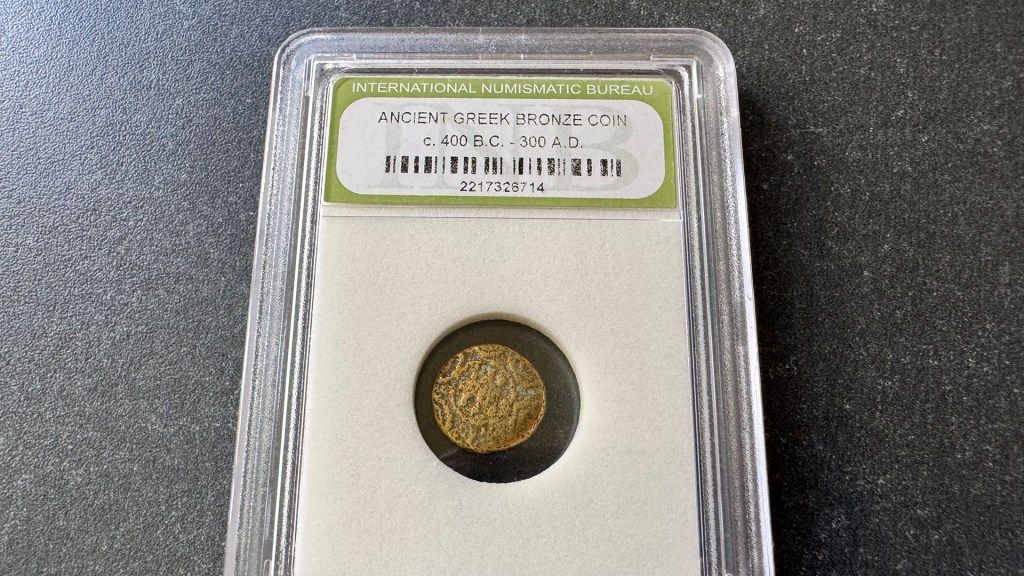
In middle school, I bought my first coin. Everything prior had been gifted so this felt special. It was a small bronze coin from ancient Greece, one of my favorite historical periods. When I was reading about its history, I wanted something I could own that would bring that world to life. Holding in my hand a coin which had been in use for over two thousand years gave me a link with the people who I had only read about, who seemed so distant. It still has this effect on me even now.
Not all of the coins in my collection are old. Recognizing my passion, my father gave me a gold American Eagle. It was different from the other coins in my collection. It didn’t give me that historical excitement but was the first coin that made me consider value, and my entire collection, in terms of an investment. I started questioning why some coins increase in value over time and others don’t, and how I might learn to anticipate that. This was around the time that people were discussing whether the United States should discontinue the penny. I wanted to know how rarity and demand, and even public opinion, affect the value of something. It was these questions that led me to become interested in economics and our financial markets.
A piggy bank and its resulting lifelong collection of coins has linked two passions of mine which at first glance appear to be different but which are in fact very closely connected. History and research has taught me how economies, governments and societies have developed while finance has sparked a deep interest in learning what people value, how people react in uncertain times and how they make decisions toward their future. Each coin that I add to my collection is a reminder that one of the best ways to understand where things are headed is to understand where things have been.