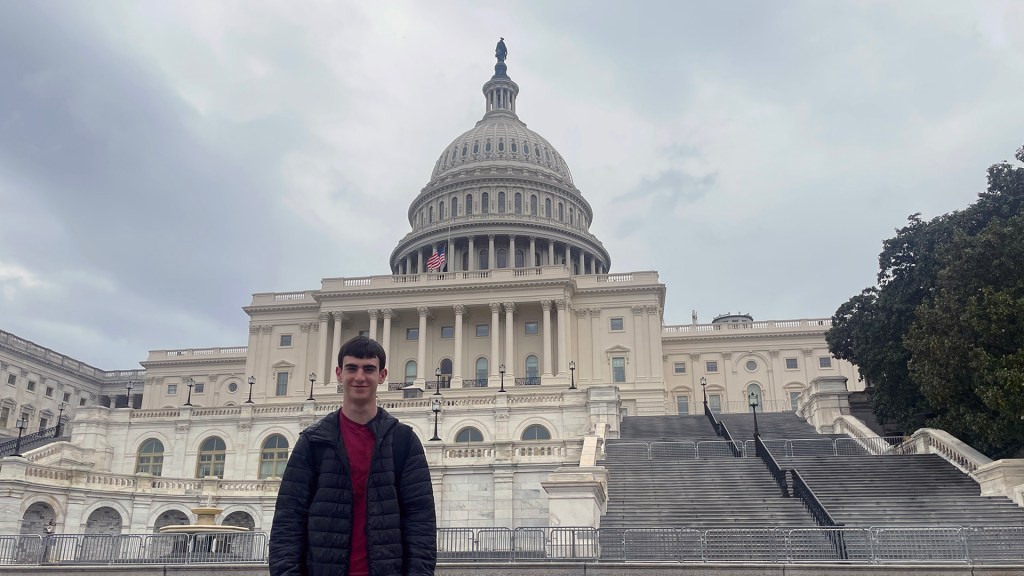
I grew up in West Hollywood, California, in a modest two-bedroom condo where I shared a room and bunk bed with my older sister for my entire life. Living with her in such close quarters taught me to be a patient and considerate roommate, qualities I didn’t recognize at the time but now, as a boarding school student, I value immensely.
In 2020, stuck in our homes and in the thick of COVID, my mom was diagnosed with breast cancer at the height of the pandemic. That period was filled with uncertainty and fear and at 11 years old, it showed me how deeply our health crisis affected not just my mom but my dad, my sister and I, our extended family and friends. Thankfully, two years later she made a full recovery, but the experience left a lasting impression on me. It showed me how existing health systems and policies can empower close-knit families in moments of crisis or create devastating setbacks.
As a sophomore, I took my first economics class and saw how it all connects to real life issues, not just medical care but how cities operate, our housing, transportation and people’s livelihoods. I realized that economics isn’t just about markets or numbers, it’s about real people and families like mine.
Last summer, I was able to take a course abroad in Lisbon, Portugal, a city whose economy is directly tied to the Atlantic Ocean. By studying their fishing communities, aquaculture and tourism, I was able to see how the ocean fuels industry, creates jobs and generates income. I also saw how this can all fall apart with factors like climate change and pollution.
These experiences have crafted me into an aspiring economist. I am genuinely passionate about this field of study and I want to carry this motivation with me into my college major. Economics feels like more than an academic pursuit, it’s an opportunity to make a meaningful impact on society.
 Simon Ugolnik